
CO 16 Denial Code is a common medical billing denial indicating that a claim lacks required information or contains errors needed for proper processing. Healthcare providers often encounter this denial when documentation, modifiers, authorization details, or patient information are missing or incomplete.
What Is the CO 16 Denial Code?
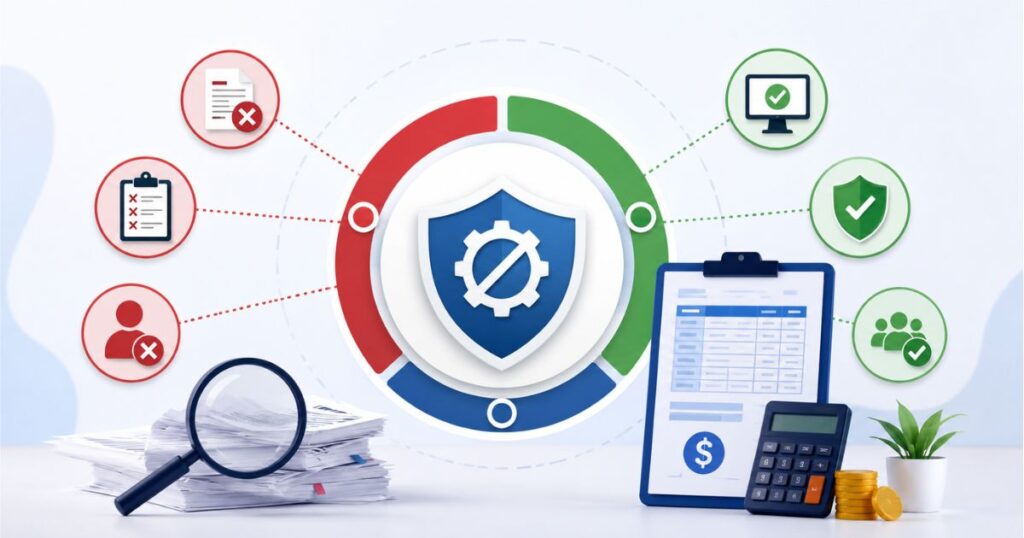
Let’s start at the source. The official X12 ANSI definition of denial code CO 16 is:
“Claim/service lacks information or has submission/billing error(s) which is needed for adjudication.“
In plain English: the payer got your claim, looked at it, and said “we can’t process this something’s missing or wrong.”
The “CO” prefix stands for Contractual Obligation. This group code is important because it determines who’s financially responsible for the denied amount. Under CO, that responsibility sits with the provider not the patient. You agreed to this when you signed your contract with the payer. That means you cannot pass a CO 16 denial to the patient, full stop.
Here’s the other thing that makes CO 16 unique: it’s intentionally broad. X12 designed it this way. The code itself doesn’t tell you what’s wrong it just signals that something is. That’s why CO 16 must always appear with at least one RARC code. The RARC is the real diagnosis.
Think of it this way: CO 16 is the fire alarm. The RARC is the smoke detector telling you which room is on fire.
Why CO 16 Is Different From Every Other Denial Code
Not all denial codes are created equal. One of the costliest mistakes billing teams make is treating CO 16 the same as codes that require appeals or write-offs.
Here’s how CO 16 stacks up against the most commonly confused denial codes:
| Denial Code | What It Means | Can Patient Be Billed? | Resolution Path |
| CO 16 | Missing or incorrect claim data | No | Correct data and resubmit |
| CO 45 | Contractual adjustment (write-down) | No | Write-off not a denial |
| CO 97 | Already adjudicated/duplicate | No | Appeal only |
| CO 197 | Prior authorization missing or invalid | No | Retroactive auth or appeal |
| CO 50 | Service not medically necessary | No | Appeal with clinical documentation |
CO 16 is the only one on this list that’s almost never an appeal situation. It’s an administrative fix. The payer isn’t questioning whether the service was necessary or covered they’re saying the paperwork has a hole in it. Plug the hole, resubmit, get paid.
Misclassifying CO 16 as CO 197 is a particularly common error. Both can involve prior authorization but CO 197 means the auth was genuinely absent or invalid, while CO 16 with a prior auth RARC means the auth number was simply missing from the claim. One needs authorization pursuit. The other needs a data correction. Getting this wrong wastes weeks.
The 8 Most Common Causes of CO 16 Denials

CO 16 doesn’t just happen. Something upstream went wrong and it almost always happened before the claim ever reached the payer.
Here are the eight triggers that drive the vast majority of CO 16 denials:
- Patient demographic mismatches A wrong date of birth, a transposed member ID digit, a misspelled name, or a gender field that doesn’t match the payer’s file. “Robert Chen“ on the claim, “Robert A. Chen“ on the insurance card that’s a denial.
- Missing or invalid NPI The rendering provider’s NPI isn’t on file, the group NPI was submitted where an individual NPI was required, or the NPI simply doesn’t match payer records.
- Incorrect CPT or ICD-10 codes A wrong procedure code, a diagnosis that doesn’t support the billed service, or a missing modifier that the payer requires. Learn how Anemia ICD- 10 Codes are billed correctly to avoid this exact trigger.
- Missing prior authorization number The service required pre-approval and the auth number was left off the claim. The service may have been authorized but if the number isn’t on the claim, the payer won’t know that.
- Invalid place of service code The wrong POS code was selected, or it’s inconsistent with the procedure billed.
- Taxonomy code errors Missing or incorrect provider specialty identifier, especially common during new provider onboarding or system migrations.
- Incomplete CMS-1500 Box 21 Missing or insufficient diagnosis codes in the diagnosis field. This is disproportionately common when billing teams transition software platforms.
- PECOS non-enrollment The ordering or referring physician isn’t registered in the CMS Provider Enrollment, Chain, and Ownership System. Major trigger for DME and diagnostic claims.
CO 16 Triggers by Specialty
Different specialties have their own CO 16 patterns. If your practice falls into one of these categories, these are the triggers to watch most closely:
| Specialty | Most Common CO 16 Trigger | Watch For |
| DME / DMEPOS | Ordering physician not in PECOS | RARC: MA13, N264, N265 |
| Emergency Medicine | Patient demographic mismatch at intake | RARC: N382, MA63 |
| Orthopedics | Missing modifier (LT, RT, 59) | RARC: M51 |
| Cardiology | Referring physician missing or invalid | RARC: N264, MA63 |
| Dental (crossover claims) | Missing tooth number or CDT code | RARC: M51 |
| Mental Health | Missing prior authorization number | RARC: N290 |
Mental health providers face unique billing challenges see our Behavioral & Mental Health Billing Services guide to understand how CO 16 with RARC N290 is commonly resolved in this specialty.
Your CO 16 RARC Decoder What Every Remark Code Is Telling You
Here’s the truth: when you get a CO 16 denial code, the CO 16 itself tells you almost nothing actionable. Everything useful is in the RARC.
The RARC is a secondary code that appears on your Explanation of Benefits (EOB) or Electronic Remittance Advice (ERA) alongside CO 16. X12 standards require that every CO 16 carry at least one RARC it’s not optional. If you see CO 16 without a RARC, something went wrong with the transmission itself. Call your clearinghouse.
Here are the remark codes you’ll encounter most often and exactly what to do with each one:
| RARC | What It Means | Plain-English Problem | Your Fix |
| M51 | Missing/incomplete/invalid procedure code | CPT code is wrong, missing, or invalid | Verify correct CPT, check modifier requirements, resubmit |
| N264 | Missing/incomplete/invalid ordering provider name | Physician name doesn’t match PECOS or is absent | Confirm PECOS enrollment, correct name, resubmit |
| N290 | Missing/incomplete/invalid rendering provider ID | Rendering NPI not on file or incorrect | Update NPI, verify with payer, resubmit |
| MA63 | Missing date of birth | Patient DOB field is blank or incorrect | Re-verify DOB with patient records, update and resubmit |
| MA13 | Requires ordering physician information | DME claim is missing ordering provider details | Add ordering physician NPI and name, resubmit |
| N382 | Missing/incomplete patient ID | Insurance member ID has an error or mismatch | Re-verify insurance card, correct member ID, resubmit |
| M60 | Missing/incomplete Certificate of Medical Necessity | CMN or DIF documentation absent on DME claim | Obtain signed CMN, attach to claim, resubmit |
| N575 | Ordering provider name mismatch | Name submitted doesn’t match what’s in payer’s system | Correct name to exactly match PECOS records, resubmit |
| N265 | Missing/incomplete/invalid ordering provider primary identifier | Ordering physician NPI is absent or wrong | Verify NPI in NPPES, update claim, resubmit |
| N276 | Missing/incomplete/invalid ordering provider secondary identifier | Secondary ID for ordering provider is missing | Add required secondary identifier per payer guidelines |
The golden rule: don’t touch the claim until you’ve identified the RARC. Billing teams that skip this step end up resubmitting the exact same broken claim and collecting the exact same denial.
How to Fix a CO 16 Denial: Step-by-Step Resolution
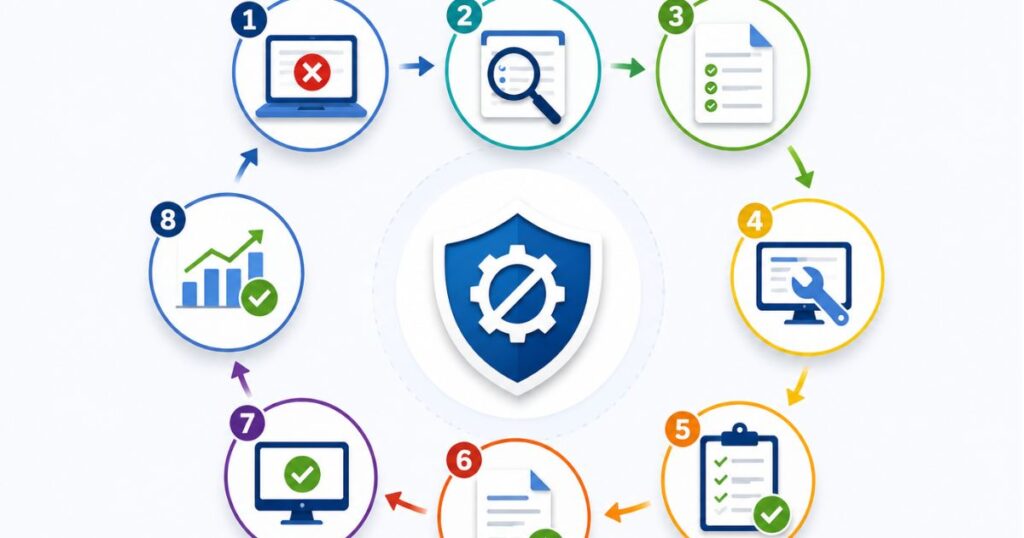
Once you have your RARC, the path forward is straightforward. Follow this exact sequence every time:
Step 1 Pull the EOB or ERA immediately. Locate the remittance document from the payer. In your billing software, this will be in the denial work queue. In a raw 835 file, look in the MIA/MOA segments for Medicare claims or the SVC loop for service-line denials.
Step 2 Identify the RARC. Find every remark code attached to the CO 16 denial. There may be more than one. List them all before you do anything else.
Step 3 Match each RARC to the decoder table above. Don’t guess. Each code points to a specific data element. A CO 16 with N264 is a completely different problem than a CO 16 with MA63. Treat them separately.
Step 4 Go to the source not just your system. If the denial is for a patient demographic error, re-verify with the patient directly or their insurance card not just your existing records, which may be wrong. If it’s a provider data error, verify against PECOS or the payer’s provider portal.
Step 5 Correct the specific field. Only that field. Make the targeted correction. Don’t touch other claim data unless a separate RARC flagged it. Unnecessary changes can create new errors.
Step 6 Resubmit electronically. Always. Paper resubmissions introduce new errors and move slower. Use your clearinghouse or directly via the payer’s EDI connection. Do not refile as a new claim unless the payer specifically requires it submit as a corrected claim with the appropriate billing indicator.
Step 7 Track the resubmission and follow up every 15 days. Set a tickler. If the corrected claim doesn’t move to payment status within 15 days, contact the payer for a status update. Don’t wait for the next denial cycle to find out something went wrong again.
One more thing: CO 16 is not an appeal situation. Do not send a medical necessity letter. Do not write a clinical justification. This is a data correction not a coverage dispute. Sending an appeal wastes time and may confuse the payer’s workflow.
Does CO 16 Give You a New Timely Filing Window?
This is the question billing teams get wrong more than any other and the answer is almost always the one nobody wants to hear.
For the majority of payers, including Medicare: no. A CO 16 denial does not restart your timely filing clock. The original date of service is what the clock runs from and it kept running the moment that service was rendered.
Here’s why this matters in practice. Say your payer has a 90-day filing window and you receive a CO 16 denial on day 60. You now have 30 days to correct the claim and resubmit. Not 90 new days. 30 days.
Miss that window and the claim becomes permanently uncollectable. The denial code doesn’t change but the claim’s financial status does. It moves from “fixable administrative error” to “write-off.”
A small number of commercial payers allow a specific number of days from the denial date to resubmit a corrected claim some allow 30 days, some 45. But this is the exception, not the rule. Never assume this applies unless you’ve confirmed it in the payer’s contract or provider manual.
The practical rule: the moment a CO 16 denial lands on your desk, check the original date of service against the filing deadline. That deadline is your true urgency signal not the denial date.
Can You Bill the Patient for a CO 16 Denial?
Short answer: No. Absolutely not.
The CO group code in CO 16 stands for Contractual Obligation. When you enrolled in the payer’s network, you agreed to accept their adjudication decisions and their financial adjustments. CO denials fall entirely on the provider side of that agreement.
This is the direct opposite of a PR (Patient Responsibility) denial code where the patient genuinely owes the balance. CO 16 is your problem to fix, not your patient’s bill to pay.
Billing a patient for a CO 16 denial is a compliance violation. It can trigger audits, payer contract termination, and in some cases, regulatory action. If your billing team is flagging CO 16 denials for patient billing by mistake stop and retrain immediately.
Expert Insight What a 12-Year Denial Management Specialist Wants You to Know
After more than a decade working denial management across independent practices, group clinics, and large DME suppliers, the single most consistent pattern is this:
CO 16 is never a payer problem. It is always a process problem.
Every CO 16 denial is a downstream symptom of something that broke upstream at intake, at eligibility verification, during provider onboarding, or somewhere in claim creation. The payer didn’t cause it. Your workflow did.
The practices that struggle most with CO 16 are the ones that treat each denial as an isolated event. They fix the claim, resubmit, and move on. Then they get the same denial next month. And the month after.
“If your CO 16 rate exceeds 3% of total claims, something earlier in the workflow is leaking. Your billers are catching a downstream symptom not solving the root problem.”
The practices with the lowest CO 16 rates do something different. When a CO 16 denial comes in, they ask two questions not one. First: how do we fix this claim? Second: why did this happen, and what process change prevents the next one?
A real-world example: a multi-location orthopedic group was running a CO 16 rate above 6%. After auditing three months of denials, the root cause wasn’t coding errors it was a group NPI versus individual NPI confusion that crept in during a practice management software migration. One system setting. Hundreds of denials. Fixed in a day once identified.
Another case: a DME supplier receiving repeated CO 16 denials with N264 remark codes discovered that a high-referring physician had retired but their NPI was still being auto-populated by the billing software from a saved template. Every claim went out with a deactivated NPI. The fix took five minutes. The root cause took three months to find because nobody was looking for it.
7 Prevention Strategies That Eliminate CO 16 Before the Claim Leaves Your Office

The best CO 16 denial is the one that never happens. Here’s how to build that prevention system:
- Verify insurance eligibility at every visit not just for new patients. Coverage changes. Plans lapse. Member IDs update. A patient you’ve seen 20 times can still have a CO 16 denial on visit 21 if their plan changed and nobody checked.
- Implement claim scrubbing software before submission. A good claim scrubber catches the majority of CO 16 triggers missing fields, invalid codes, NPI mismatches before the claim ever leaves your clearinghouse. This is the single highest-ROI prevention investment available to any billing team.
- Verify PECOS enrollment for every ordering and referring provider. If a physician you rely on for referrals or DME orders isn’t in PECOS, every related claim is at risk. Run a PECOS check when any new provider relationship begins and periodically for existing ones.
- Build a demographic verification script for front-desk staff. At every check-in, have staff verbally confirm: name spelling, date of birth, insurance plan name, member ID, and subscriber relationship. A 90-second conversation prevents a $30 rework.
- Create payer-specific rule sets in your practice management system. Different payers have different field requirements, modifier rules, and place-of-service expectations. Hard-coding those rules into your system means errors get caught before billing, not after.
- Run a monthly CO 16 denial audit by trigger type, not just by volume. Don’t just count how many CO 16 denials you received. Categorize them: how many were demographic errors? How many were NPI issues? How many were missing auth numbers? The pattern tells you where to fix the process.
- Train billing staff quarterly on CARC and RARC updates. X12 updates its code sets. Payer requirements shift. A billing team that last trained two years ago is working with outdated rules. Quarterly training is not excessive it’s how you stay current.
Conclusion
Understanding the CO 16 Denial Code is essential for reducing claim rejections and improving reimbursement rates. By identifying missing information, correcting claim errors, and submitting accurate documentation, providers can resolve denials more efficiently and prevent future billing issues.
FAQs
What does the CO 16 denial code mean in medical billing?
The CO 16 denial code means a payer has rejected your claim because it’s missing required information or contains a submission or billing error. The official X12 definition is: “Claim/service lacks information or has submission/billing error(s) which is needed for adjudication.” It always comes with at least one RARC code that identifies the specific problem.
Is CO 16 a hard or soft denial?
CO 16 is a soft denial which means it’s correctable. Unlike hard denials (which require appeals or are written off), CO 16 just needs the missing or incorrect data to be fixed and the claim resubmitted. As long as you act before the timely filing deadline, recovery is almost always possible.
What are the most common remark codes that come with CO 16?
The most frequently seen RARCs with CO 16 are M51 (procedure code error), N264 (ordering provider name missing or invalid), MA63 (missing date of birth), N290 (invalid rendering provider ID), and N382 (patient ID error). Each one points to a specific field that needs correction before resubmission.
How long do I have to fix a CO 16 denial?
For most payers, including Medicare, the timely filing clock runs from the original date of service not from the denial date. A CO 16 denial does not give you a new window. Some commercial payers allow a set number of days from the denial date, but always verify this in your specific payer contract before assuming it applies.
What is the difference between CO 16 and CO 97?
CO 16 is an administrative denial something is missing or wrong in the claim data, and it can be corrected and resubmitted. CO 97 means the claim has already been adjudicated the payer considers it a duplicate submission. CO 97 requires an appeal, not a data correction. Sending a corrected claim for a CO 97 denial will likely generate another CO 97.
Why does CO 16 always come with a remark code?
Because CO 16 is intentionally broad by X12 design. The code signals a category of problem missing or incorrect information without specifying which field failed. X12 ANSI standards explicitly require that every CO 16 denial carry at least one RARC to identify the exact data element causing the rejection. Without the RARC, the billing team would have no way of knowing what to fix.