
Recoupment in medical billing is the process by which an insurance company recovers money that was previously overpaid to a healthcare provider. This can happen due to billing errors, duplicate payments, coding mistakes, or claim adjustments. Understanding recoupment is essential for healthcare providers because it directly affects revenue cycle management and financial stability. Proper documentation and accurate claim submission can help reduce recoupment issues.
What Is Recoupment in Medical Billing?

Recoupment is the process where an insurance payer takes back money it already paid you, usually after deciding it overpaid the original claim.
Think of it like a store catching a pricing error after you’ve left with your receipt. They paid you too much, and now they want the difference back either by asking for a check or by deducting it from your next visit.
This is different from a simple correction. A correction fixes a claim before money changes hands. Recoupment happens after you’ve been paid, which is why it hits your cash flow so hard.
Payers recover the money in two ways:
- Offset: The payer withholds the overpaid amount from your future claims. You’ll see a smaller-than-expected deposit.
- Direct repayment: The payer sends a demand letter, and you write a check to settle the balance.
Insurance recoupment in medical billing affects every type of practice, from solo chiropractors to large multi-specialty groups. The key is knowing how to spot it and respond fast.
What Causes Recoupment? Common Triggers
Payers don’t pull money back at random. Every recoupment traces to a specific reason and most are preventable. Here are the usual suspects:
- Coding errors: Upcoding (billing for a more expensive service than provided) or unbundling (separating services that should be billed together) are top audit triggers.
- Duplicate payments: The same claim gets paid twice, often when a resubmission slips through.
- Medical necessity denials: A post-payment review decides the service wasn’t medically necessary after all. This is one of the most common causes behind why medical claims get denied.
- Missing or incomplete documentation: If your notes don’t support the claim, the payer wants its money back.
- Retroactive eligibility changes: A patient’s coverage gets cancelled or changed after the date of service.
- Coordination of benefits errors: Two payers pay the same claim, and one wants its share returned. Read more about the pros and cons of having two health insurance policies.
In Medicare and Medicaid audits, coding errors and documentation gaps are by far the most common causes. RAC (Recovery Audit Contractor) reviews dig deep into these areas, so tight documentation is your best defense.
Recoupment vs. Refund: What’s the Difference?
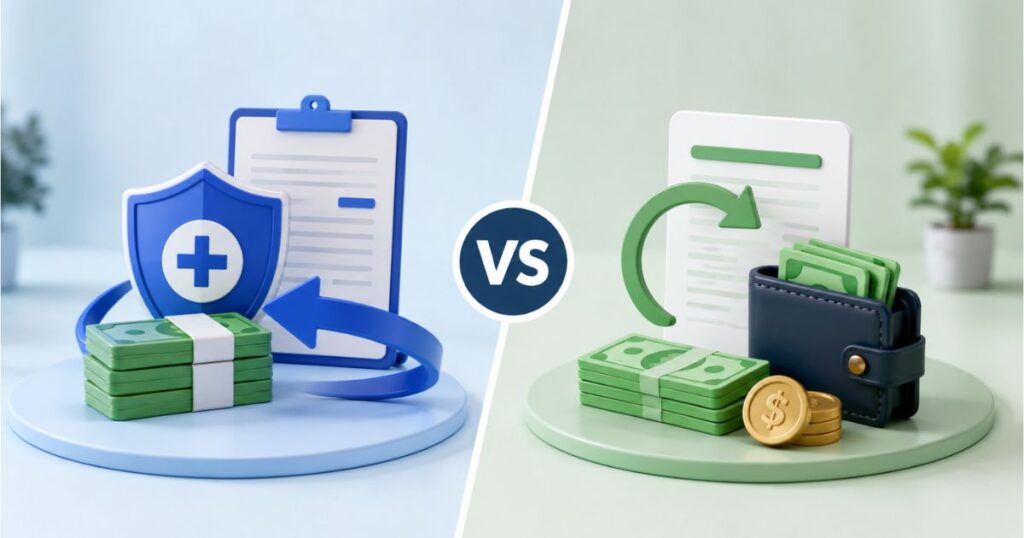
Here’s the simplest way to remember it: a refund is provider-initiated, while a recoupment is payer-initiated. When you catch an overpayment yourself and return it, that’s a refund. When the payer catches it and demands it back, that’s recoupment.
| Aspect | Refund | Recoupment |
| Initiated by | Provider | Payer |
| Trigger | Self-identified overpayment | Audit / claims review |
| Timing | Soon after error spotted | Weeks to years later |
| Recovery method | Provider sends payment | Offset or repayment demand |
| Provider control | High | Low |
| Cash flow impact | Planned | Often unexpected |
There’s also a compliance angle you can’t ignore. Under the federal 60-day overpayment rule, once you identify an overpayment, you have 60 days to report and return it. Sit on it, and you could face False Claims Act liability. So when you spot an overpayment, a proactive refund isn’t just good practice it’s the law.
Bonus: Recoupment vs. Reversal vs. Denial
These three terms get mixed up constantly, but they describe very different events.
| Term | What It Means | When It Happens |
| Recoupment | Payer reclaims money already paid | After payment, post-review |
| Reversal | Payer cancels or corrects a claim | Usually immediate |
| Denial | Claim is never paid at all | Before any payment |
In short: a denial means you never got the money, a reversal cancels a transaction before it settles, and recoupment claws back funds you already received. For a deeper look at denial types, see our guide on CO-16 Denial Code and CO-197 Denial Code. Knowing the difference helps you post each one correctly and respond the right way.
How Recoupment Appears on an EOB/ERA
This is where a lot of billers get tripped up. Recoupment doesn’t show up next to the original claim—it appears in the PLB (Provider Level Balance) segment of the 835 ERA (electronic remittance advice).
Watch for these common adjustment codes:
- WO (Withholding/Overpayment Recovery): Money is being recouped directly from this payment.
- FB (Forwarding Balance): A balance is being carried forward to a future remittance, often when there aren’t enough funds to recover the full amount now.
To stay sane, match each PLB recoupment back to its original demand letter using the reference number and creation date. This tells you exactly which claim the payer is recovering against.
One more warning: if your software auto-posts payments and doesn’t handle the PLB segment correctly, you can end up with a phantom credit balance on the original claim. That credit looks like you owe a patient or payer money you don’t and it creates a compliance headache during audits. Always reconcile the PLB against the affected claims.
The Recoupment Process: Step by Step
- Recoupment follows a predictable path. Knowing each stage helps you act before your money disappears.
- The payer conducts a post-payment review or audit. This can be random, data-driven, or triggered by a pattern in your claims.
- You receive a formal recoupment or demand letter identifying the affected claims and the amount owed.
- You get a response window typically 30 to 60 daysbto act.
- You choose your path: repay, appeal, or set up a repayment plan.
- If you do nothing, the payer offsets the amount from your future payments automatically.
- The recoupment is posted in your billing system and the account is reconciled.
- The single biggest mistake? Letting that response window lapse. Silence is treated as agreement, and the offset begins.
How to Respond to a Recoupment Notice
When a demand letter lands, move quickly and methodically. Here’s your action plan:
- Verify the notice against your records immediately. Payers make mistakes too. Confirm the claim, the patient, and the amount.
- Identify the response deadline. In Medicare, stopping recoupment often requires action by day 30, so don’t wait.
- Gather your documentation. Pull clinical notes, the original claim, and the relevant payer policy.
- Decide your strategy: repay, appeal, or negotiate a repayment plan.
- Post the recoupment correctly in your billing software so your ledger stays accurate.
- Fix the root cause. If a coding habit triggered the takeback, correct it before it happens again.
Treat every notice as time-sensitive. A few days of delay can cost you your right to appeal.
How to Post Recoupment in Billing Software
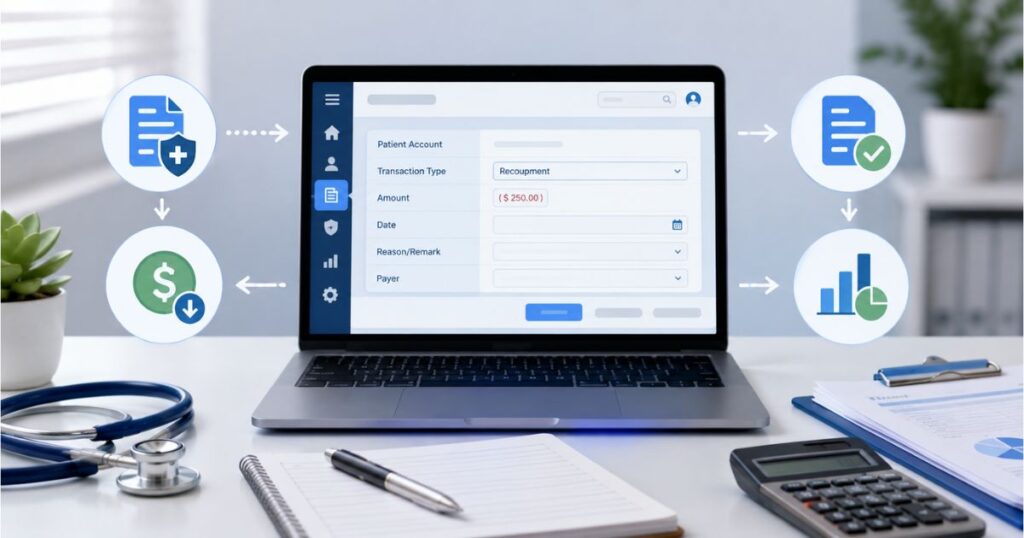
Posting recoupment correctly keeps your accounts receivable honest. The general logic looks like this:
- Locate the original claim and the payment that’s being recovered.
- Reverse or zero out the original payment to reflect that the money is no longer yours.
- Apply the offset so your ledger matches the reduced deposit.
- Here’s the catch: many billing systems won’t let you enter a “negative payment.” When that happens, you’ll need a workaround often posting the recoupment as a separate adjustment or using the system’s dedicated PLB/offset handling.
- Whatever method you use, the goal is the same: your books should reflect reality. Sloppy posting creates inflated AR and phantom credit balances, which muddy your financial picture and raise red flags in audits. Clean posting is the foundation of healthy revenue cycle management.
Legal Timelines for Payer Recoupment
Timelines matter, and they vary by payer and jurisdiction. Here’s what you need to know:
- The federal 60-day overpayment rule: Under the ACA and tied to the False Claims Act, once you identify an overpayment, you must report and return it within 60 days.
- Medicare’s recoupment timeline: After a demand letter, interest starts accruing around day 31, and recoupment typically begins around day 41 if you take no action. Filing an appeal within the first 30 days can pause the offset.
- State laws for commercial payers: These vary widely. Many states cap how far back a commercial payer can look. For example, New York limits recovery to 24 months from the original payment date (with exceptions for fraud). Other states set similar 12-to-24-month windows.
A quick disclaimer: rules change and differ by payer and state. Always verify the current timelines that apply to your contracts and location before acting.
Impact on Accounts Receivable and Credit Balances
Unmanaged recoupments don’t just cost you money they distort your entire financial picture.
When a recoupment isn’t posted correctly, the original claim can show a phantom credit balance: it looks like you’re holding money that belongs to a patient or payer when you’re not. Multiply that across hundreds of claims and your AR becomes unreliable.
This matters for two reasons:
- Compliance: Unresolved credit balances can trigger audit scrutiny and even penalties.
- Cash flow: Inflated AR hides the true health of your practice and makes forecasting nearly impossible.
Regular credit balance reviews keep your books clean, your AR days accurate, and your practice audit-ready.
From the Field: Expert Insight
“The recoupments worth fighting are almost always the ones with solid documentation behind them,” says one revenue cycle manager who’s handled hundreds of takebacks. “We once had a payer recoup nearly $8,000 on a batch of claims flagged for medical necessity. We pulled the clinical notes, matched them to the payer’s own policy, and submitted a clean appeal before the 30-day window closed. Every dollar came back.”
The lesson? Documentation is your strongest asset. A recoupment backed by a thin record is one you may have to accept. A recoupment that contradicts well-organized clinical notes is one you can often reverse if you act fast.
How to Prevent Payer Takebacks
The best recoupment is the one that never happens. Build these habits into your workflow:
- Run regular internal audits. Catch coding and documentation issues before the payer does.
- Code accurately and document thoroughly. Every claim should be backed by notes that justify it.
- Monitor claims in real time. Spot duplicates and eligibility issues before they’re paid.
- Train staff on payer policies. Rules change often, and outdated habits cause takebacks.
- Integrate your EHR and billing software. Connected systems catch overpayments and errors early.
Prevention isn’t glamorous, but it’s far cheaper than fighting takebacks after the fact.
How to Appeal a Recoupment
Not every recoupment deserves a fight but many do. Here’s how to decide and how to win:
- Appeal when you have the evidence. If your documentation clearly supports the original claim, appeal. If the payer is right, repay and move on.
- Build an evidence-backed case. Combine clinical notes, the original claim, and the payer’s own policy to show why the payment was valid.
- Meet every deadline. Filing within the payer’s window often 30 days for Medicare can halt the offset while your appeal is reviewed.
A strong, timely appeal is your best tool for keeping money you rightfully earned.
Conclusion
Recoupment in medical billing plays an important role in correcting overpayments and maintaining accurate reimbursement processes. Healthcare providers should regularly audit claims, monitor payer communications, and ensure compliance with billing guidelines to minimize recoupment risks. Effective management of recoupment helps improve cash flow and supports a healthier revenue cycle
FAQs
What is recoupment in medical billing?
Recoupment in medical billing is when an insurance payer reclaims money it already paid you, usually after an audit identifies an overpayment. The payer either demands a direct repayment or withholds the amount from your future claims.
What is the difference between recoupment and refund?
A refund is provider-initiated you catch the overpayment and return it. A recoupment is payer-initiated the payer catches it and demands the money back, often through an offset on future payments.
How long does a payer have to recoup an overpayment?
It depends. The federal 60-day rule requires providers to return identified overpayments within 60 days. Commercial payer lookback periods vary by state, with many capping recovery at 12 to 24 months from the original payment date.
Can I stop a recoupment once it starts?
Often, yes. With Medicare, filing an appeal within the first 30 days of the demand letter can pause the offset. Acting fast is essential, since recoupment typically begins around day 41 without action.